Tradeoffs
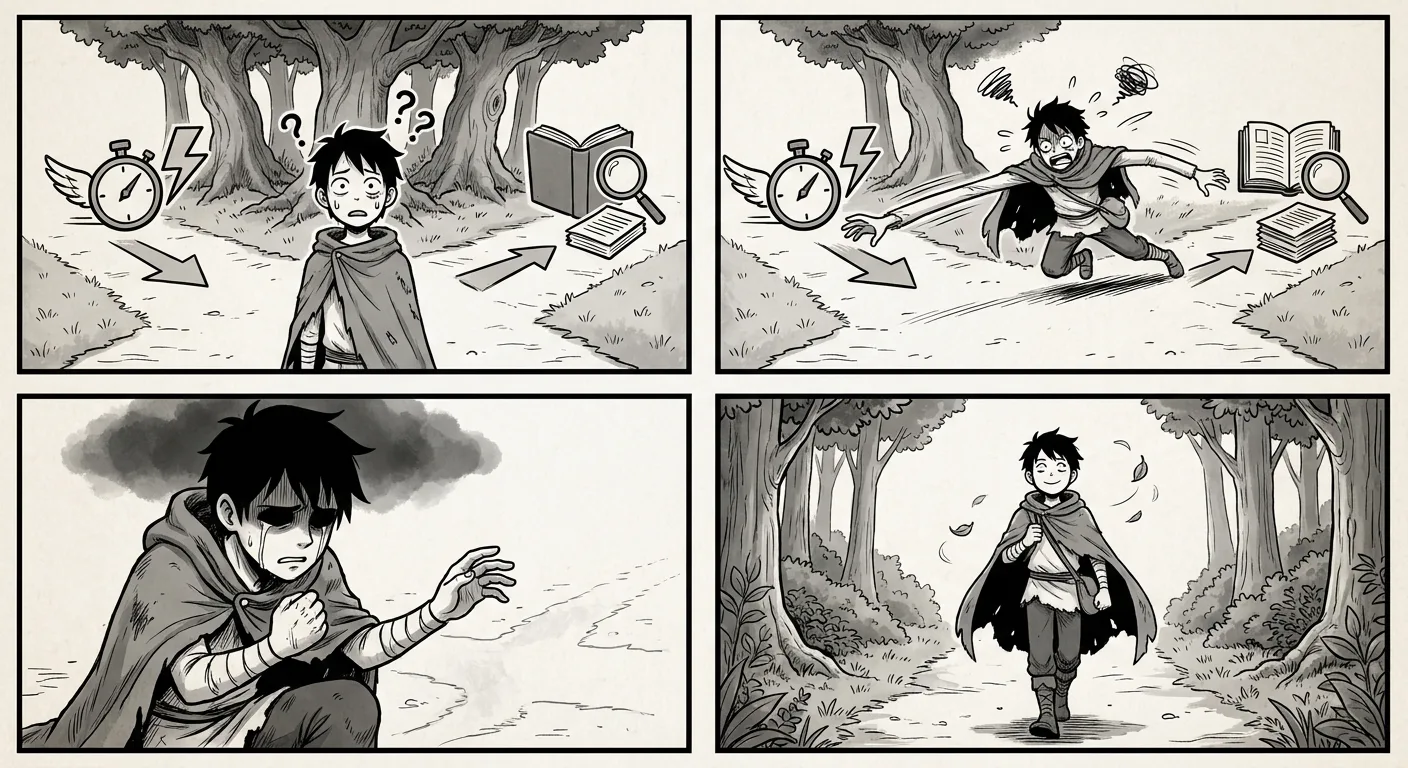

Every YES is a NO to Something Else
The "pick two" triangle that captures this principle in project management is the Iron Triangle -- Scope, Time, Cost. You can optimize for any two, but the third must give.
What's the "choose two out of three" triangle? The Iron Triangle (also called the Triple Constraint or "Good, Fast, Cheap -- pick two"). Three vertices: Scope (what you build), Time (when it ships), Cost (resources). Optimizing two always sacrifices the third. When someone promises all three, one of: they're lying, they're externalizing the cost (burnout, technical debt), or they're silently redefining a vertex.
The Iron Triangle is the project-management instance of Tradeoffs -- the universal principle that you cannot have everything for free. See also Every YES is a NO to Something Else (the symmetric framing in choice space).
Sister Principles
A Fixed Observation Budget Trades Breadth Against Depth -- the measurement-space instance, and a property rather than a principle: given a fixed number of observations, breadth times depth is conserved by arithmetic. Sibling to Iron Triangle, which is the project-space instance on three axes.
Locate Broadly, Then Measure Narrowly -- the procedure that sequences a tradeoff instead of blending it: spend breadth first, depth second, rather than accepting a mediocre compromise on both.
Complexity Is the Tax on Capability -- specific instance in the capability-vs-simplicity axis: you cannot extend a system's reach without accepting more apparatus. Trading simplicity for capability is one of the canonical tradeoffs.